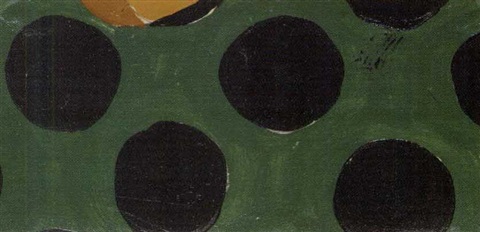
The first post-war artist to appropriate camouflage was French painter Alain Jacquet. Exploring an interest in the visual effects of disruptive patterns, Jacquet created camouflage interpretations of his peers’ works, including Camouflage Jasper Johns (after Johns’ Flag, 1954), and Camouflage Hot Dog Lichtenstein, both his 1963. In 1964, Jaquet reinterpreted Manet’s Le Dejeuner sur l’herbe, which he described as breaking “reality into dots” thus having the same properties as camouflage. In 1964, Jacquet wore a camouflage suit recycled from a US Army parachute to the opening of his show at the Alexander Iolas gallery in New York, attended by Andy Warhol and Roy Lichtenstein.
Hardy Blechman in Turk/Turk


Leave a comment