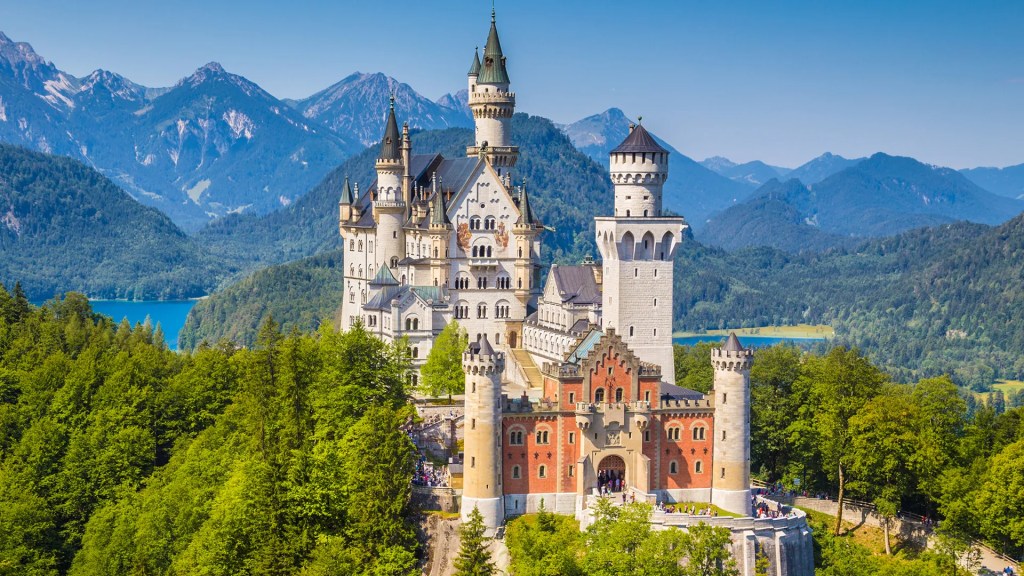
Ignorant strangers may have thought these mountains innocently serene; yet what Ludwig loved about them was their superhuman solemnity, the grave melancholy of the untouched valleys, the black crests, the forbidding ravines and rocks, the motionless mountains. Whenever he could manage, Ludwig spent the nights in one of the several primitive hunting huts which his father had built all over the Bavarian Alps. There Ludwig sat for hours, all by himself in front of a primitive stove, heaping logs on the fire, reading, dreaming: while outside, in the eternal rigour of the Alpine altitudes, glaciers reflected the frozen moon.
*
Silver-grey walls and towers, forbiddingly steep and barren, rise from a rock which the torrential Peollat River separates from the rest of the world. “It is just about the most beautiful spot one could find, holy and unapproachable,” Ludwig said in a letter to Wagner. Looking at the structure from a distance, one is positive he has seen this jagged silhouette more than once in medieval paintings – the royal dwelling rising five stories straight from the rock; the pillars and buttresses, the sharp gables and towers solemnly pointing to the sky; the pine forest, dark and primordial, almost touching the foundation; the torrent dropping thunderously into blank space. And if the archaic exterior intimates Ludwig’s loneliness and his somewhat artificial posture, a walk through the castle is like a guided tour through Ludwig’s soul.
Richter/Ludwig
 THE NORTH RIDING PROJECT
Leave a comment