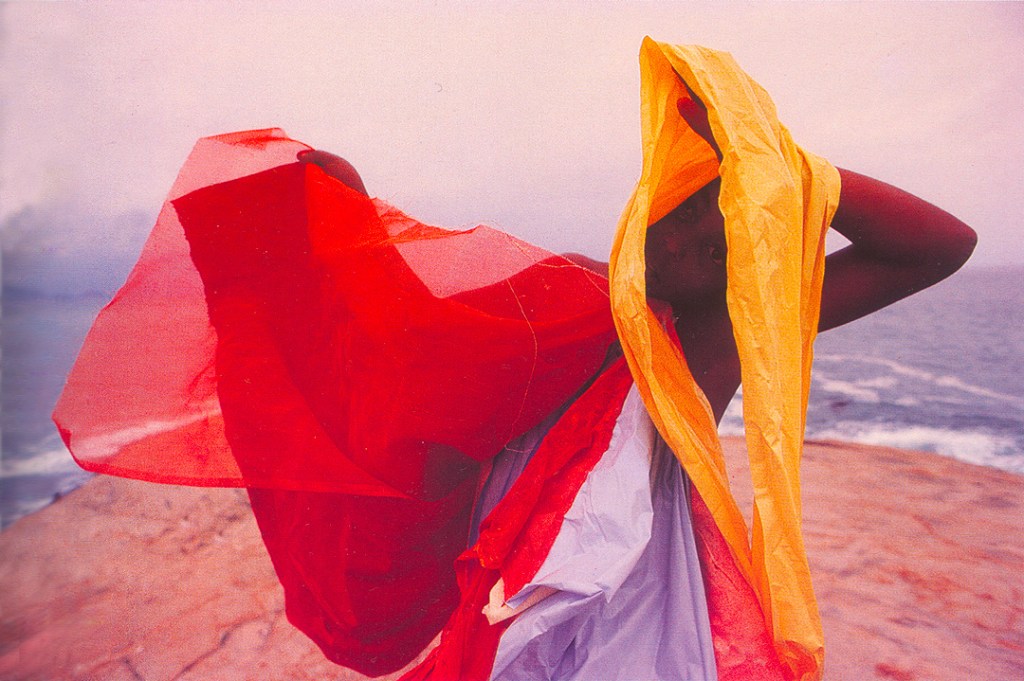
Oiticica’s Parangolés inherited many of the characteristics of the informal constructions in the favelas: never really finished, they are built with materials recycled from the streets. Oiticica recognized that his inspiration came from “markets, beggars’ houses, decoration of popular festivities, religious celebrations, carnival” while he emphasized the reactionary quality of “good taste” and the importance of finding creative features in ordinary, everyday life.
Bruno/Oiticica
The first public presentation of Parangolės occurred in 1965 at the opening of the exhibition Opinião 65, held at Rio de Janeiro’s Museum of Modern Art. The attempt made by Oiticica, along with other dancers from the Mangueira samba school, to enter the museum and the refusal they were given created a big scandal. Mocking the sacred space of bourgeois art, Oiticica proposed the idea that the people should occupy the museum. His motto was: “From the street to the museum, the favela in the museum!”
Pottier/Oiticica
 THE NORTH RIDING PROJECT
Leave a comment