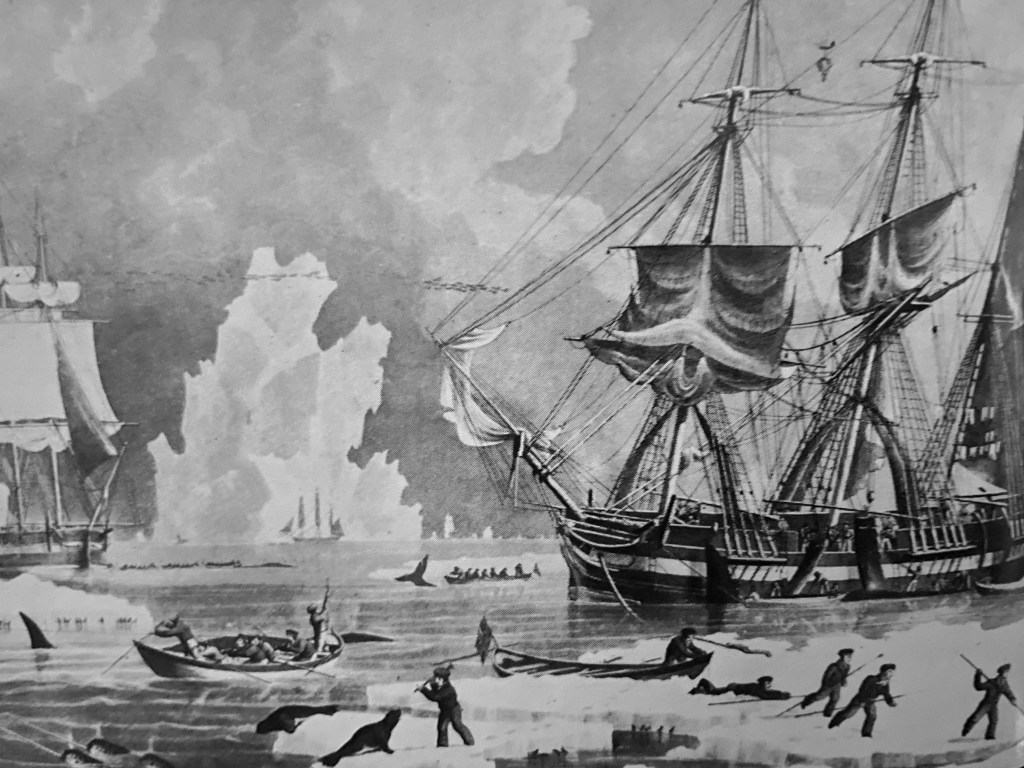
The method of hunting the whale was extremely hazardous and not very different from the methods used in Moby Dick. On sighting the whale, the small boat, rowed by perhaps eight or ten men, with the harpoonist at the pow, set off in pursuit. The harping iron was fitted to a wooden staff with which the harpoonist would plunge the iron into the whale. That, in turn, was fastened to about five fathoms of fine quality hemp rope, which was always kept ready in the bow of the boat. The extreme danger of the job lay in the need to approach the whale closely enough for the harpoonist to plunge his weapon deeply into the flesh, with the attendant risk that the animal would smash the boat or capsize it. Having been struck, the whale plunged, carrying the line with it, while someone aboard stood ready with wet cloths to prevent the king post smouldering as the rope hurtled round it, and someone else stood ready to attach further lines. While the hunt lasted the boat careered, prow down, through the water. It used to be reckoned that the crew would have to pay out ten lines before the whale’s strength was exhausted and it was obliged to surface. Then, if all went well, the boats in the vicinity closed in upon it, and killed it with harpoons and lances. It took all the available boats, tethered one behind the other, to tow the whale back to the ship.
Morey/North Sea
 THE NORTH RIDING PROJECT
Leave a comment